Your business doesn't need to be everywhere on the internet. It just needs to feel familiar to the people you want to reach. Think about the last brand you discovered. Maybe you saw a LinkedIn post, stumbled across a short video on Instagram, and then noticed the same company mentioned somewhere else a few days later. Suddenly, that business feels established, recognizable, and worth exploring. There's a marketing concept behind this called the Internet Echo Strategy, and it's an interesting approach for small businesses trying to compete for attention without an enormous advertising budget.
The idea has been popularized by content creator Kane Kallaway, who describes how entrepreneurs and creators can make themselves appear more frequently across social media. The process starts with one substantial piece of content, often a podcast, interview, or long-form video. That content is broken into smaller clips, insights, and stories distributed across multiple platforms, sometimes through dedicated secondary accounts. Instead of relying on one post to reach everyone, you create repeated opportunities for the same audience to discover your ideas. The goal isn't necessarily to become famous overnight. It's to make your brand easier to recognize and remember.
Here's how I would apply this to a small business. Imagine you're a consulting company that publishes a thoughtful article about five mistakes businesses make when redesigning their websites. Rather than publishing it once and moving on, you turn that article into a short LinkedIn video explaining the biggest mistake, an Instagram carousel showing before-and-after examples, a YouTube Short featuring one practical tip, and an email newsletter offering the complete breakdown. Each piece has a slightly different purpose, but they're all reinforcing the same expertise. Better yet, they're directing interested customers back to your website, where they can learn more about your services.
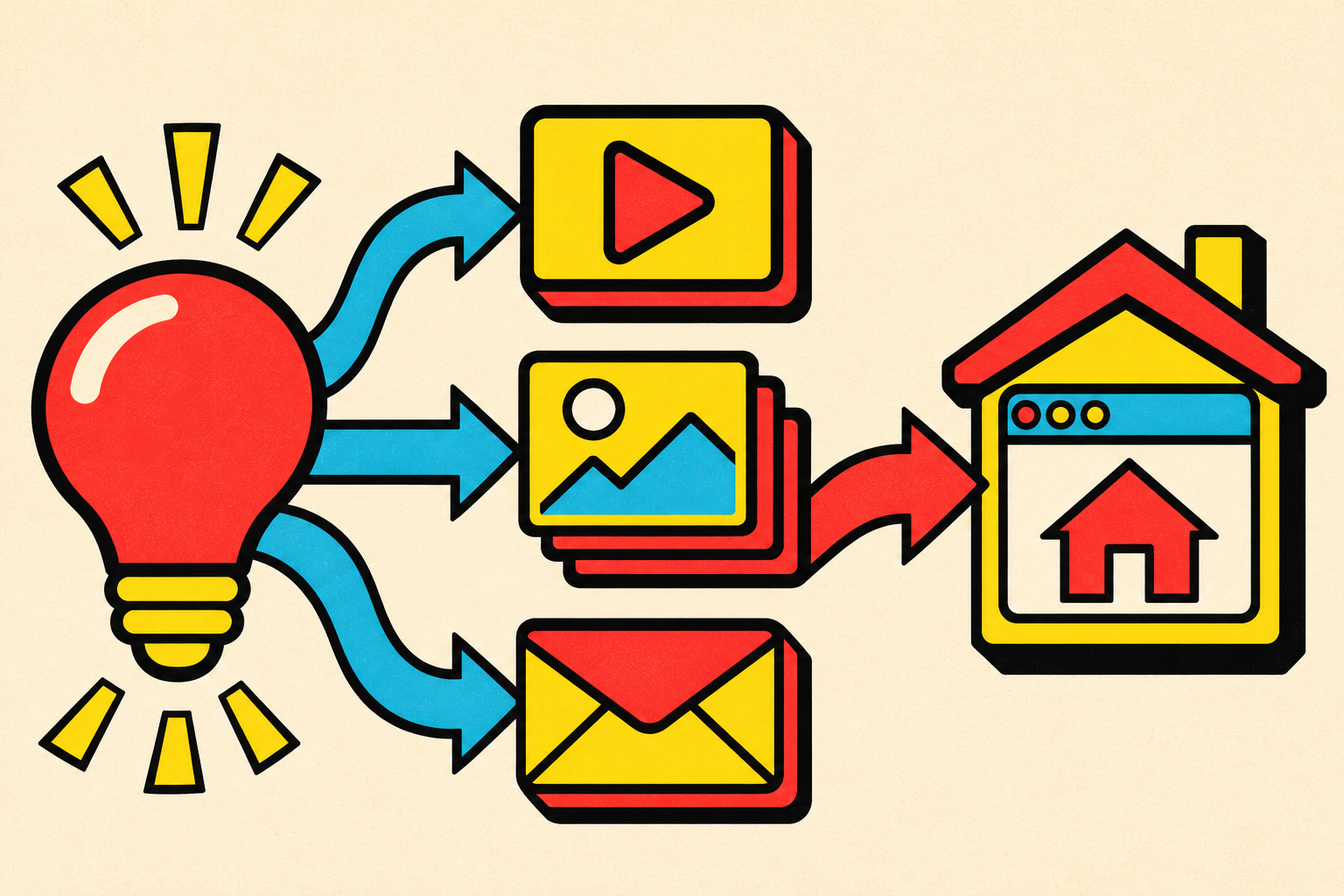
What makes this approach appealing is that it changes how we think about content creation. Too many businesses treat every social post, newsletter, and blog article as a separate assignment. That's exhausting, particularly when you're managing a small team or doing the marketing yourself. The Internet Echo Strategy encourages you to develop a strong idea first and then find multiple ways to communicate it. However, there's an important distinction between repurposing content and simply copying the same message everywhere. A good LinkedIn post should feel like a LinkedIn post. A TikTok video should feel native to TikTok. As Contentful explains in its guide to content repurposing, the value comes from adapting content to different audiences and channels, not endlessly repeating identical material.
The interesting part is how accessible this becomes with today's AI tools. You could start with one well-researched article or a recorded conversation, use AI to identify five or six worthwhile takeaways, draft platform-specific posts, create video scripts, and organize a publishing calendar. A human still needs to review the message, make the creative decisions, and ensure everything sounds authentic. For a business getting started, I'd recommend one substantial piece of content each month, several smaller variations, and two distribution channels where prospective customers actually spend their time. Then measure what happens. Are more people visiting your website? Are they searching for your company by name? Are those visits turning into inquiries? At Color Culture, this is exactly the kind of repeatable marketing workflow I'd want to build and test before investing in more channels.
The biggest takeaway for me is that the Internet Echo Strategy isn't really about posting more. It's about getting more value from the useful things you already have to say. A small business doesn't need dozens of social media accounts, thousands of video clips, or a massive production team to get started. It needs a clear point of view, consistent visual identity, helpful content, and a deliberate path from discovery to becoming a customer. That's where good brand strategy, digital design, and automation come together. If you're looking to create a stronger online presence without making content production a second full-time job, Color Culture Design Company can help you design a practical system around your business.