AI PRODUCT BUILDINGChalkie “AI Betting Assistant” for SportsLine
Making sports insights accessible through conversation.
Role
Lead Product Manager and UX Director
Industry
Sports Betting
Duration
1 Month
Services
Rapid design sprint
Deliverables / Platform
iOS & Android Mobile Applications, Amazon Lex
Project Overview
A conversational AI proof of concept for SportsLine that explored how fans could ask questions naturally and receive relevant insights from an existing library of sports data.
Product Strategy | Conversational AI | Voice UX | Conversation Design | Mobile Product Integration
The opportunity
SportsLine had extensive sports data, projections, and expert analysis. Finding a specific answer, however, could require navigating multiple screens and interpreting information across different formats.
Chalkie explored a more direct experience: ask a question, clarify the details, and receive a relevant answer.
The opportunity extended beyond convenience. Understanding what people asked could reveal information that was difficult to find, missing from the experience, or worth developing into a new product capability.
The product concept
Chalkie was conceived as a voice-driven assistant within the SportsLine mobile experience. Using Amazon Lex’s speech recognition and natural-language understanding capabilities, the proposed product would connect everyday questions with structured sports insights.
A user might ask which team was favored that evening or request the projected total for an upcoming game. Chalkie would identify the request, gather missing information, and return the corresponding insight.
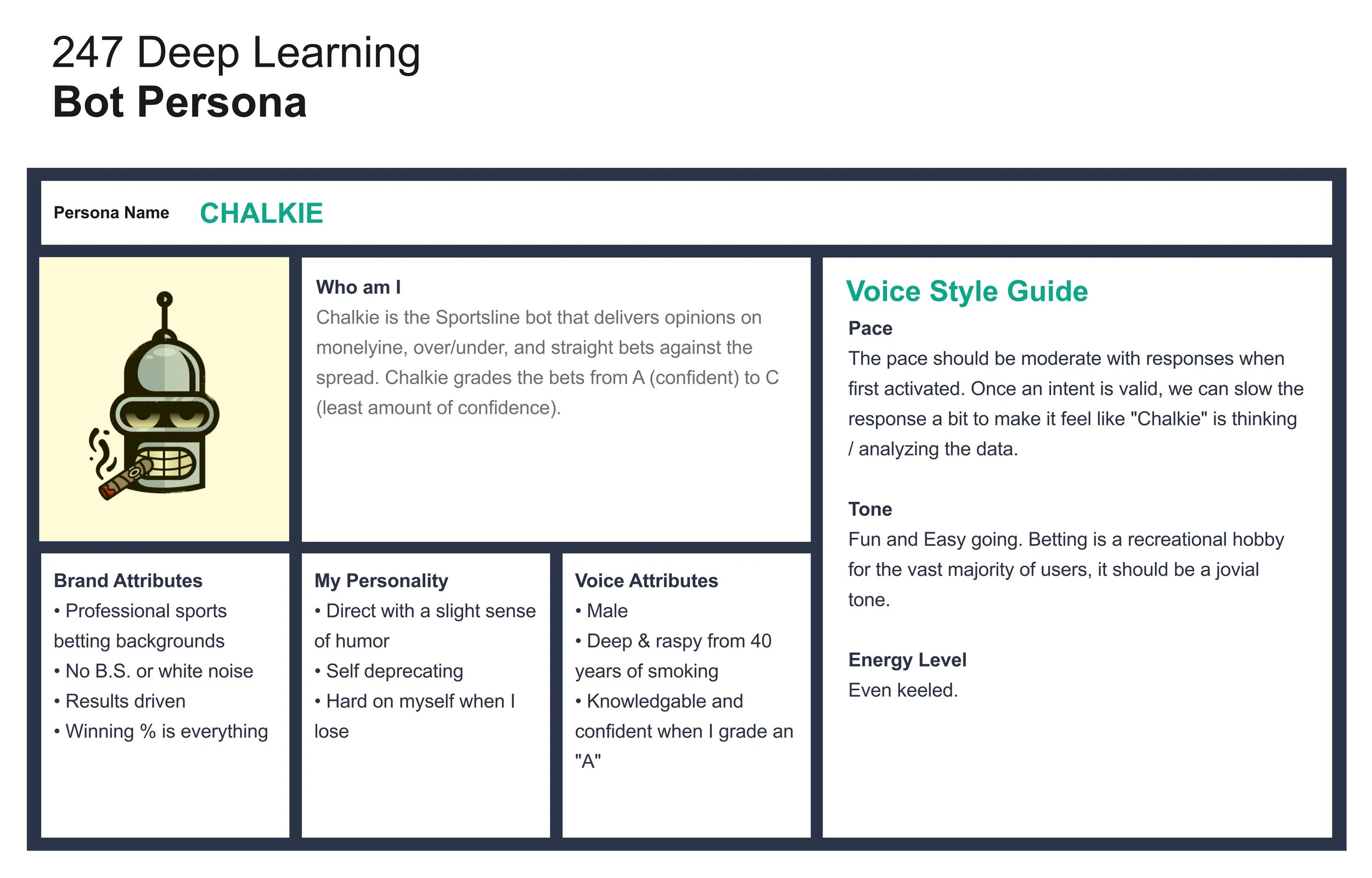
Its personality was deliberately direct, knowledgeable, and lightly humorous—an approachable guide to a complex data set.
Defining what the assistant could answer
The concept focused on four core types of questions:
Game favorites: Which team is projected to win?
Point spreads: What does the data suggest about a team covering the spread?
Projected totals: What is the expected combined score?
Top picks: Which games have the strongest available grades?
These categories became a structured set of intents, sample questions, and required information, including team, date, league, and sport.
The specification also accounted for the way people actually speak. “Philadelphia,” “76ers,” and “Sixers,” for example, could refer to the same team. Phrases such as “today” and “tonight” needed to connect to the appropriate game.
This work translated a broad AI idea into a defined set of product behaviors.
Designing for incomplete questions
Real conversations rarely arrive with every detail included.
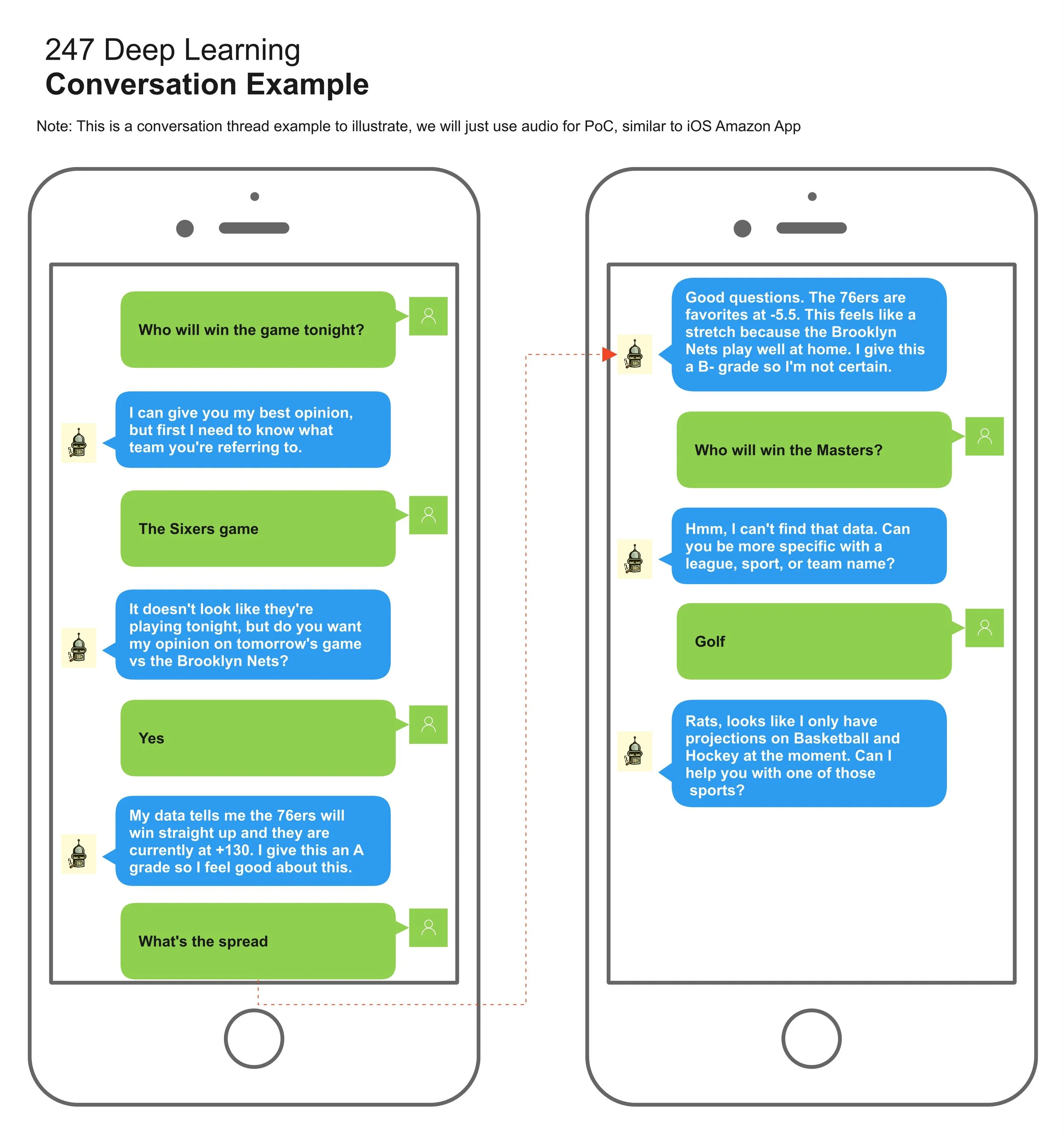
Someone asking, “Who’s going to win tonight?” might need to specify a team. A selected team might not have a game scheduled. A follow-up question might depend on the previous answer.
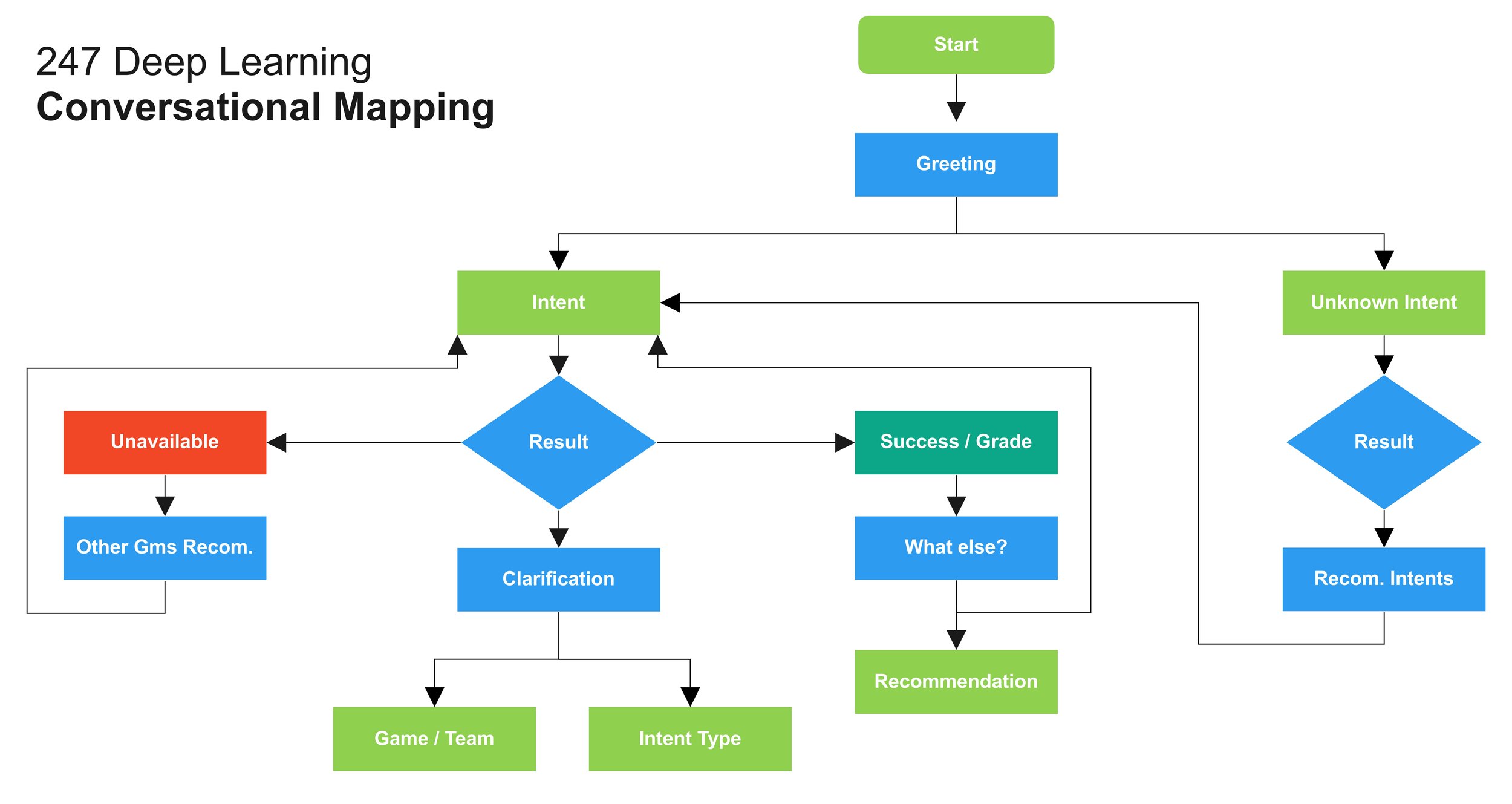
Chalkie’s conversation flows explored how the assistant should:
Ask for missing details.
Recognize alternative team names and common phrasing.
Offer another game when the requested matchup was unavailable.
Handle follow-up questions within the conversation.
Explain unsupported requests and suggest questions it could answer.
These recovery paths were central to the experience. A useful assistant needed to help people move forward when their first question could not be answered.
Bringing voice into the mobile experience
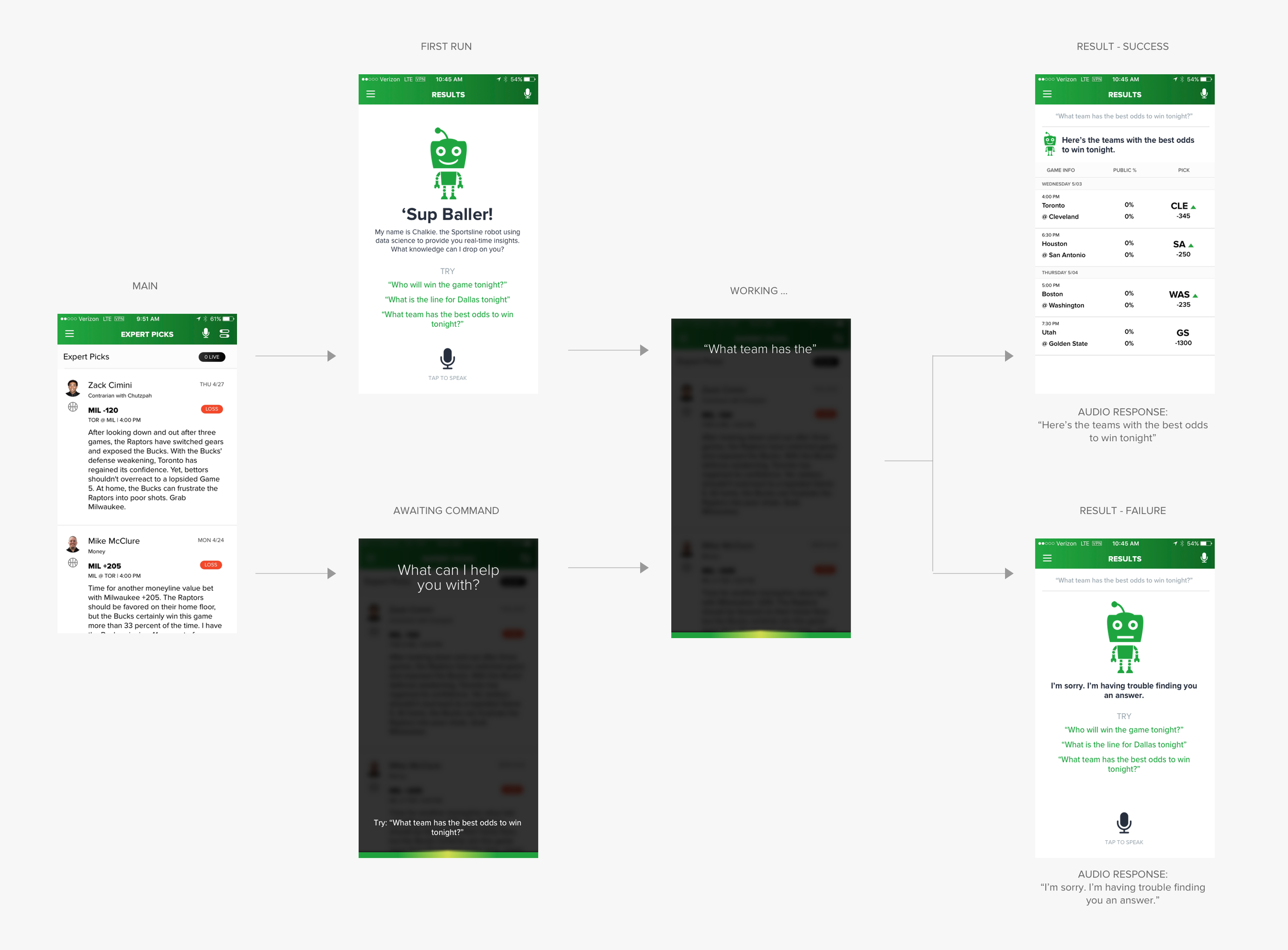
The design explored three ways to introduce Chalkie within the existing app: a navigation microphone, a dedicated tab, and a prompt within the picks feed.
The proposed experience covered first-use onboarding, listening, processing, results, and unsuccessful requests. Spoken responses were paired with visual results so users could review information on screen.
Sample questions helped introduce the capability. Recovery messages gave users a clear next step when an answer was unavailable.
What the work established
The documented work produced a foundation for implementation and testing:
A defined proof-of-concept scope and learning objectives.
A bot persona and voice guidelines.
Four core intents with sample utterances and supporting information requirements.
Conversation maps covering clarification, follow-ups, and unsupported requests.
Mobile entry-point concepts and interface flows.
The next validation questions were clear: Would users choose voice to explore sports insights? Could they reach relevant answers reliably? What would their questions reveal about unmet needs?
Why this project matters
Chalkie illustrates the product work behind a useful AI experience: choosing a focused problem, organizing the underlying information, defining the assistant’s boundaries, and designing what happens when a request is unclear.
For clients exploring AI products, the same approach helps turn an ambitious idea into a specific experience that can be built, tested, and improved.